JTWJAPAN TOWN WORLDWIDE
伝統と先進の調和
JTW ─ JAPAN TOWN WORLDWIDE / 2026 — 2042

Japanese towns,
all around the world.

More Japanese people who truly live in the present.
Towns where your flaws become your art.

—
DAYS UNTIL 18 MARCH 2042
2042.03.18
TARGET DATE
In his own words

“On 18 March 2042, I will found a nation.”

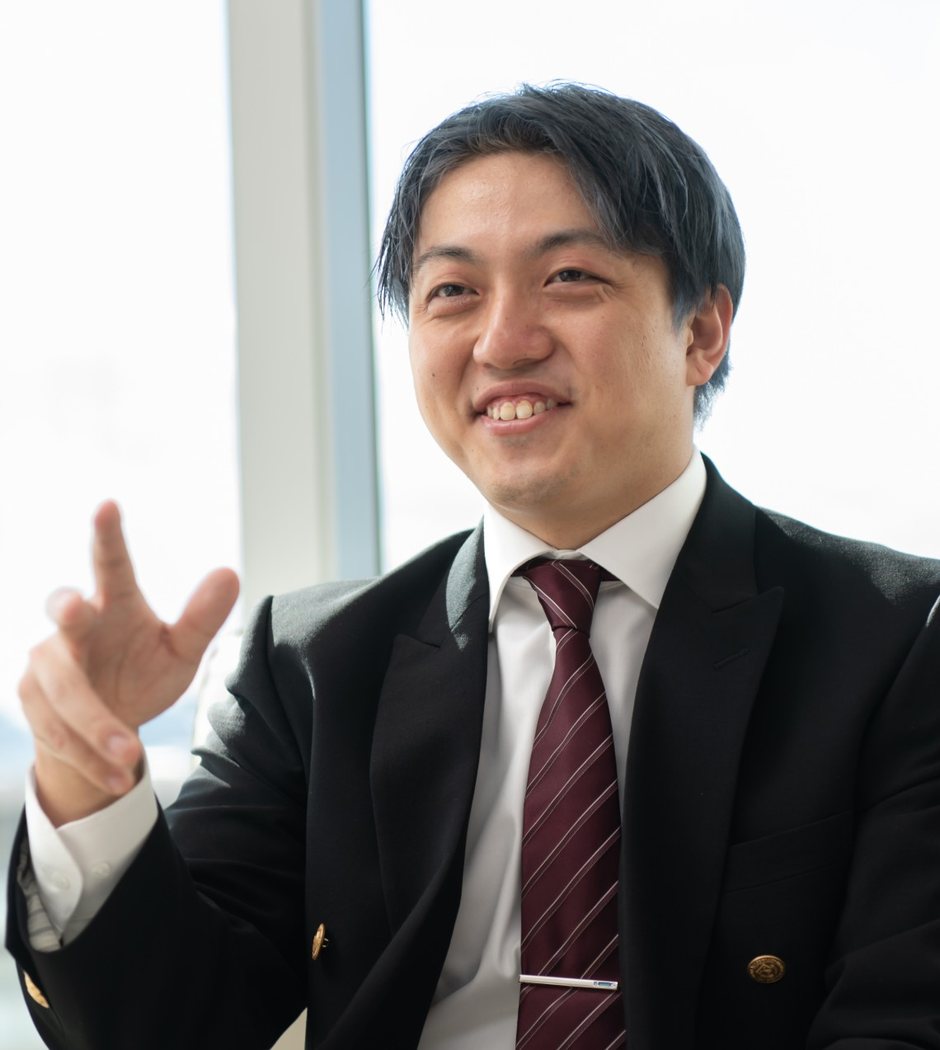
Koichi Ueno, who started this, says it himself in an interview: “Make your complex your weapon. From birth to death, life is art.” (Interview in Japanese.)

Watch in 90 seconds

First, see it.

Why we are doing this

We don't want to build a town.
We want to widen what people can become.

For four years I met 150 people every month. What I saw was a Japan where very few people live in the present—young people, people in their forties, people in their sixties. So we will build another place. Not to reject Japan, but so that Japanese people can live in the present once more.

Living in the present

More people who live in the present

“I thought, why not just enjoy living now? So I want people to live in the present—and to live through it.”

Turning flaws into art

Turn your complex into art

“I think of a life, from birth to death, as a work of art. So I want to turn my own insecurities into art, too.”

Widening someone's possibilities

Keep widening someone's possibilities

“Widening someone's possibilities is the purpose of my life. Even at the moment I'm dying, I want to be lifting someone's potential.”

All words: Koichi Ueno (translated from Japanese)

What we want back

There was a Japan where people
lived each day with everything they had.

Dinner around a low round table. Watermelon on the veranda. Children crowding the penny-candy shop. The lathe in a backstreet factory. The bathhouse curtain, the festival shrine, the red-lantern alley, the school sports day. Japan in the 1960s was not rich—but everyone was alive in the present.

Dinner around the chabudai
Watermelon on the veranda
The penny-candy shop
A backstreet factory
The public bathhouse
The festival shrine
The red-lantern alley
School sports day

“In the years of rapid growth, even within fixed rules, so many people were desperately living in the present. I want to bring that Japanese spirit back, one more time.”KOICHI UENO

This is not nostalgia. It is so that the next generation can create that energy again, somewhere in the world. A JTW town is not a replica of old Japan. It is a new town that inherits the will to live that Japan had then.

Why abroad, not in Japan

Build it abroad, and people start to move.
More of the world comes to know Japan.

If we built a Japanese town inside Japan, only people who can already come to Japan would visit. Build it abroad, and people flow in both directions.

Not a historic Japantown. In English, “Japantown” usually means an old immigrant neighbourhood. A JTW town is something new: a town built from scratch with a host country—farms, schools, workshops and homes—founded on Japanese craft and spirit.
A doorway to Japan, close to home
1

Japan for people who cannot come to Japan

Not many people can visit Japan again and again. With a Japanese town near their own country, they can eat, touch, stay—and experience Japan.

2

“I want to go to Japan” begins here

Someone meets Japan in the town and thinks, “Japan is wonderful. I want to see the real thing.” A JTW town is a doorway that sends people to Japan.

3

Japanese people rediscover Japan

You only understand how good Japan is once you step outside. Japanese people who work, teach and live in a town abroad see their country from the outside—and learn to describe its value in their own words.

4

A whole town of connections to the world

From abroad to Japan, from Japan to abroad—people, work and money move both ways. Going abroad alone is hard. With a town, there is a place to go and a place to come back to.

And then, to the real Japan
In 30 seconds

We will do just three things.

Japanese handwork is disappearing
1

Preserve

We take over workshops and companies with no successor, and keep the craft and the jobs alive.

Japanese craft in a shop abroad
2

Carry it to the world

We don't change the object. We change the photographs, the words, the price—and where it is sold—bringing the best of Japan to people who are glad to pay for it.

An image of a Japanese town abroad
3

Build towns

By 2042, a Japanese town abroad where artisans live, children learn and the world comes to visit.

Picture this

The morning of 18 March 2042.

People are gathering on the hill. Some came from Japan. Some were born in this country. Some are families who moved here from far away. Everyone still looks a little sleepy.

Below, beside the sea, lies a small town. Dark tiled roofs. Rice terraces under the morning mist. At the harbour, wooden crates of pottery packed in straw are being loaded onto a boat—bound, as every day, for a shop somewhere in the world.

From the workshop on the corner you can already hear a hammer. The master blacksmith, who once nearly closed his forge in Japan, is showing his third apprentice how to strike a blade. Next door, the lids are coming off the indigo vats.

The young man leaning over the vat used to believe, back in Japan, that he had nothing. Today he makes the deepest indigo in town. His fingertips are always blue, and he doesn't hide them.

On the school veranda, children are deciding whose workshop they will apprentice in today. The market fills with vegetables from the town's fields and plates from the town's kilns.

Sixteen years ago there was nothing here. Only a plan on paper, and a few people who believed that what is broken can be mended with gold.

The same morning is beginning in other towns around the world. In a town beside the desert. In a town in a snowy valley.

We want to reach this morning, for real.
That is why we are laying the first stone today.
What is happening now

A master of the craft. No successor.
And the skill disappears.

A workshop where only the tools remain

In forty years, sales of Japan's traditional crafts have fallen to about one-fifth, and the number of people making them to about one-sixth. More than six in ten of today's artisans are over fifty.

≈ 1/5

Production value: ¥541 bn (1983) → ¥105 bn (FY2022)

≈ 1/6

Workers: 288,000 (1979) → 48,000 (FY2022)

10 years

18% are in their seventies or older. Little time is left to learn directly

Sources: Ministry of Economy, Trade and Industry (Traditional Craft Industries Office); The Association for the Promotion of Traditional Craft Industries

“Traditional crafts don't sell in Japan. But they sell abroad.”KOICHI UENO

Kintsugi: mending a broken bowl with gold
Our philosophy

What is broken
can be mended with gold.

Kintsugi is the Japanese craft of repairing a broken bowl with lacquer and gold instead of throwing it away. The repair is not hidden. It becomes the most beautiful part.

This is not only about bowls. Koichi Ueno, who started this, disliked himself from the age of nine. As he kept meeting people, the cracks were slowly mended with gold—and became his own landscape. A complex can become art.

A workshop with no successor, a company that can no longer go on, a person who cannot like themselves—each is a broken bowl. We don't throw it away and we don't hide it. We mend it. A JTW town is a place where you can live without hiding your cracks.

A day in a JTW town

The story continues.
A little more of life in town.

You met the harbour, the forge, the school and the market in the story of that morning. Here are the other hours of the day.

Dawn / the day begins in the fields

DawnFields and water

The town begins with a farm. Choosing for ourselves what we eat and drink is the foundation of everything.

Morning / a clinic with a garden

MorningClinic

Not only curing illness, but designing a life that prevents it. A walk in the garden is part of the prescription.

Afternoon / from hand to hand

AfternoonHand to hand

Skill cannot be passed on by books. A grandmother's hands guide a child's. The town protects that time.

Night / one shared table

NightThe table

Food from the town, on dishes from the town. People from different countries around one table.

Night / the summer festival

NightFestival

Once a year the world comes to the festival—wearing yukata, wandering the stalls, promising to come back next year.

Midnight / one workshop still lit

MidnightA light in the workshop

The street is quiet, but one window is still glowing. Someone is still working with their hands.

Education at home

The ones who raise Japan's future
are its mothers.

School is not the only education. What a child watches longest is a parent at home—working, thinking, laughing. That is why we put the spotlight on mothers.

The kitchen is the very first school

Home is the first school

How to use your hands, how to choose food, how to treat people. The foundation for living is handed down at home. In a JTW town, parents—not only schools—take part in deciding how children are educated.

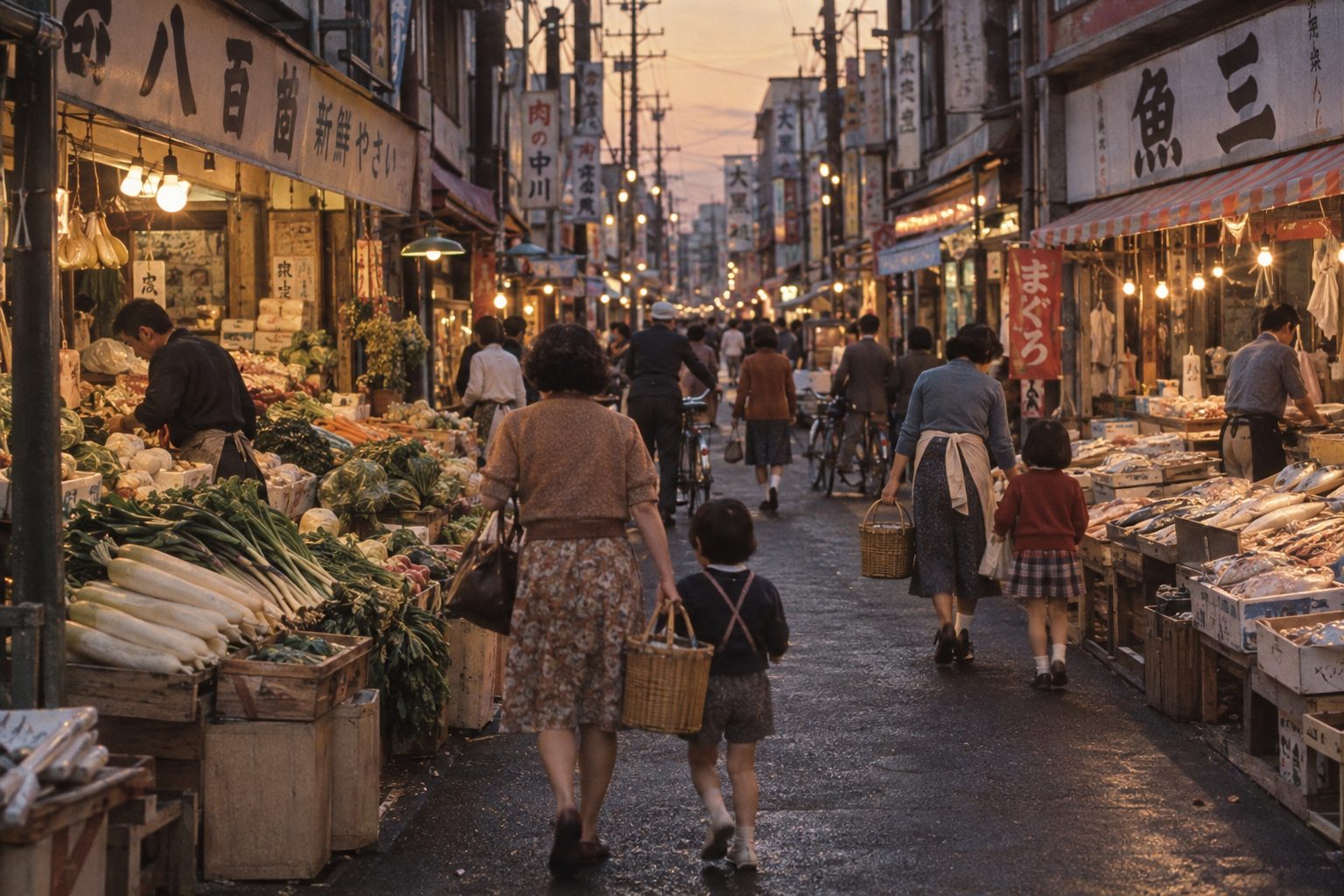
Taking a child by the hand to the shopping street (illustration)

Apron & Suit

In Japan today we run an interview media in which mothers interview business leaders. The interviewers and the editorial team are all mothers. Reconnecting with society becomes a way to like yourself again.

Work you can do from home, as a town industry

A town where mothers can work

Writing, social media, working with AI. From day one the town offers work that can be done from home in short hours. A town where mothers can work is a town a whole family can move to.

“Education at school matters. But so does what parents pass on at home. That is why I focus on mothers.”KOICHI UENO

Watch the real interviews.

From the official Apron & Suit YouTube channel (in Japanese). Every interviewer is a mother.

Building another Japan

A nation stands on three elements.
We will put them in place, one by one.

It is said that a nation needs land, people, and the power to decide for itself. We are not rejecting today's Japan, and we are not taking anything from any country. We will make agreements with countries that welcome us, and build another Japan, outside Japan. First a small town, then a special economic zone, and in time a nation. We will not start big.

Land
Territory

A place to live

A town with fields, water, homes, workshops and a school—a place to live, secured through an agreement with a country that welcomes us.

→ Japan Town
People
Citizens

People gathered around one idea

Residents are those who agree to one promise—to live as yourself—and keep the town's rules. We draw no line by nationality. A shared ID lets you live in any JTW town.

→ Residents and allies worldwide
The power to decide
Self-government

We decide our own affairs

What to learn, how to heal, what to eat, how money circulates. We begin with the autonomy a host country grants to a special zone, and widen it step by step.

→ Education · Health · Food & water · Institutions

Whether something is recognised as a nation is ultimately decided by its relations with other nations. So we will not rush. We begin by earning trust as a town.

It will not end with one town

Japanese towns, all around the world.

When the first town stands, we move to the next—built with the climate and the people of each place, on the same idea.

Southeast AsiaSouth AsiaEuropeAfricaNorth AmericaLatin AmericaOceania Japan

Regions are illustrative. No location has been decided; it will depend on the countries and people who welcome us.

A town beside the desert
A town in a snowy valley
A town on the savanna
A quarter of an old stone city
1

Be yourself in any town

A resident of one town can live, learn and work in any other. The strength to live across the world comes naturally.

2

Towns help one another

Pottery from one town sells in another town's shop. An artisan from one town teaches in another. Every new town makes each one stronger.

3

Strength flows back to Japan

People, skills and capital grown abroad return to Japan. We build Japanese towns outside Japan to bring Japan back to life.

The road

Before the dream: build capital and allies through business.

Building a town takes money, people and trust. Rather than relying on donations or debt, we earn through our own businesses—and go abroad with the businesses and the allies we have grown.

2026 —

Earn

Focus on three growing businesses and build the numbers. Take over our first company and our first workshop with no successor.

2030

Build capital

Bring together the businesses we have grown and the companies we have taken over, creating capital and a circle of allies for town-building.

2030s

The first town

Walk the candidate countries and partner with a host. Start small: fields, food, a school, workshops.

2042.03.18

Japan Town

From town to special zone. The day of the first declaration, as towns across the world link together.

This timeline is the first draft of the plan and states our goals. Timing and form will be decided with specialists and host countries.

Linking the world's towns with a single thread
The businesses that build the town

Every business we run today is
a part of this town.

The power to gather people, to create work, to take over companies and skills, to teach and to watch over one another. We are growing what the town will need as businesses in Japan first. Not all at once—starting with what already works.

Koichi Ueno
The person who started this

Koichi Ueno上野 光一

Born in Osaka on 18 March 1997. Straight out of high school he flew to Australia alone with 30,000 yen in his pocket and nowhere to live or work. A year that began with live-in farm work taught him one thing: you only understand how good Japan is once you leave it.

Back in Japan he worked across many trades and went independent at 25. He has helped about 100 companies meet decision-makers directly through social media, and today builds and runs about 50 apps himself with AI as his partner. CEO of Mugen Kaitaku Inc.

Keep widening someone's possibilities—until the very last moment.

Questions people ask

If you are new to this.

Is this about leaving Japan behind?

No. It is neither an escape from Japan nor a criticism of it. We build Japanese towns abroad to hand the best of Japan to the world—and to bring that energy back home.

Isn't a “Japantown” a historic immigrant neighbourhood?

In English, yes—San Francisco, Los Angeles, São Paulo. Ours is different. A JTW town is a new town, built from scratch together with a host country: farms, schools, workshops and homes, designed around Japanese craft and spirit.

Can this really be done?

It will not be easy. But privately built towns, and special zones built together with governments, already exist around the world. Chapter five of the full plan reviews the cases we are learning from and how we think about candidate countries.

Is it only for Japanese people?

No. Japanese people, local people, and families from far away will live side by side. What the town rests on is Japanese spirit and craft—not where you were born.

More answers to common questions are in the full plan (Japanese). Read the FAQ in the plan →

We are looking for allies

So that this does not end as one person's story.

Nothing has been built yet. That is exactly why we are looking for our first allies. If this is you—or if someone comes to mind—please get in touch.

Artisans & workshops

You want to keep a craft alive or take it abroad. Or you know a workshop with no successor.

Business owners

You want to hand on a business, or grow one together. Let's start with a conversation.

People with ties abroad

You can connect us to a country, a region, or a local partner that might welcome a town.

Supporters

Capital, knowledge, introductions. Tell us what you felt as you read this.

The official LINE account belongs to Mugen Kaitaku, Koichi's company. The automatic greeting you receive after adding it is about the company's services—just start your message with "JTW" and write your thoughts or questions about this plan.

Share this plan

If someone comes to mind, send them the text below as it is.

LINEXFacebook

Never met us? One line of feedback is welcome.

You do not need to know us. "This part was unclear." "This photo feels wrong." One line is enough, and blunt feedback helps most.

You do not have to give your name on LINE.